Weekly Click: May 16, 2012

Featured Article

MaKey MaKey: An Invention Kit for Everyone
Did you ever wish you could turn any everyday object into touch pads and combine them with the internet? Just think how cool it would be to have a banana space bar on your computer? Or wouldn’t it be REALLY revolutionary if you could play Dance, Dance Revolution with buckets of water, rather than the traditional floor mat? Well, wish no more, because thanks to MaKey MaKey you can! MaKey MaKey is an invention kit for the 21st century from our friend Eric Rosenbaum and graduate student Jay Silver from the MIT Media Lab.

We couldn’t imagine a better way to help people start to think of themselves as makers and agents of change.  So when we find out about MaKey Makey we just had to share, because when you have the “Maker’s Mindset,” you know you can change the world! MaKey MaKey is a simple Invention Kit for beginners and experts doing art, engineering, and everything in between.  It looks awesome and we can’t wait to play with it!

E-Book Nation
Every morning we see more and more people on the T reading on their Kindle or iPad.  We love this infographic that shows just who these people are.

Fresh Air Remembers Author Maurice Sendak
This is a beautiful compilation of interviews with the late Maurice Sendak on the NPR Fresh Air Program.

How Pixar Almost Lost Toy Story 2 to a Bad Backup
Pixar’s Oren Jacob and Galyn Susman recount how the files for Toy Story 2 were almost lost due to an accidental Linux command and bad backup. A good reminder to back up your important files!  Also, a great example of how you can use minimal animation with a great story.

Exploring the Role of Mobile Technology as a Health Care Helper
Here at FableVision Studios, we love seeing all the exciting ways mobile technology is changing the world.  Kudos to Johns Hopkins Global Health Initiative, which has 51 projects educating students in global mobile technologies and exploring the use of mobile technology in health.

Posted in Uncategorized | Leave a comment

Peter H. Reynolds honored with the Puppet Showplace Theatre Creative Leadership Award

Puppet Showplace Theatre

Animation and puppetry have a lot in common, and FableVision Studios has always had a strong affinity with the world of puppets.  There happens to be a great puppet theater right down the road from us, the Puppet Showplace Theatre in Brookline, MA. Established in 1974, it is the first and only year-round dedicated puppetry presenter in New England.

Peter H. Reynolds (photo by Gretje Ferguson)

Peter H. Reynolds, founder of FableVision Studios, recalls, “As a child, The Puppet Showplace inspired me to run out and get my own puppets. I quickly learned that puppets have no voice — I needed to be that voice. The Showplace continues to inspire children to tap into their imaginations and to find their voice and let the world hear. That is powerful stuff.”

On June 2nd, Peter will be honored by the Puppet Showplace Theatre as the recipient of their very first Creative Leadership Award. The award is given to someone in the community who has shown creative vision in the arts and who embodies the spirit of Puppet Showplace Theatre in inspiring creativity in people of all ages. It will be presented at the theater’s Gala Birthday Celebration, which will also feature live music, cocktails, refreshments from local restaurants, and a silent action.  David Syrotiak, founder of the National Marionette Theatre, will be presented with the first ever Paul Vincent Davis Award for excellence in puppetry.

The gala is also a fundraiser, and all proceeds will go to support the programming at the theater, which depends on the generous support of members and patrons in order to keep ticket prices affordable to families and schools.

FableVision Studios’ own John Lechner, who is on the Board of Trustees at Puppet Showplace, is a puppeteer himself. “Puppetry is storytelling, which is what FableVision is all about,” he says. “Children see a lot of puppetry on television, but there’s something magical about a live theatrical experience, and places like Puppet Showplace are rare these days. I’m hoping the theater is around for a long time.”

To order tickets for this special event, call 617-731-6400, or register online here.

To learn more about Puppet Showplace Theatre, visit their website.

Posted in Uncategorized | Tagged , , | Leave a comment

Weekly Click: May 8, 2012

Featured Article

My First Week With the iPhone

We have seen lots of technology for the blind, and now we can safely say that the iPhone represents the most revolutionary thing to happen to the visually impaired in a long time. The touchpad offers the familiar next/previous motion, which the blind need. Adding the ability to touch anywhere on the screen and hear it adds a whole other dimension, literally. For the first time, the blind can actually get spatial information about something.

Austin Seraphin is a visually impaired, avid blogger who uses an iphone to help him with his condition. Like many other visually impaired, when Austin first heard that Apple would release a touchpad cell phone with VoiceOver, the screen reading software used by Macs, he scoffed. The blind have gotten so used to promises of a dream platform, only to receive some “slapped together set of software with a minimally functional screen reader running on overpriced hardware which can’t take a beating”. Austin figured that Apple was just trying to get some good PR – after all, how could a blind person even use a touchpad? However, after going to the store and giving the phone a chance, his mind was completely changed.

To this day, Austin feels amazed at the iPhone’s capabilities. He can get email, Twitter mentions, and direct messages any time. The iPhone with VoiceOver provides an accessible interface to things which seem annoying at best over the web in a standard browser. Austin can see some light and color, but just in blurs, and objects don’t really have a color, just light sources. When he first got an iphone, he downloaded an app called ColorIdentifier and was blown away! Imagine watching the sun set, listening to the colors change as the sky darkened, roamed through a garden and using color cues to find pumpkin plants and flowers.

Maybe it’s true that hearing the color names can help nudge one’s perception, and enhance a visual experience. Amazing!

The Nerd Parent’s Guide: When and How to Introduce Your Kids to Star Wars.
What happens when your little one comes home from school one day and starts asking about classics like The Star Wars? Since the general context of the films is pretty complex and some of the aspects are too violent for young kids, how do you know when your child is ready and old enough to grasp the story? One dad had a very thought-out system of introducing his young boys to the Star Wars mythology in a slow and structured way. There’s been more talking and playing in the backyard so far than actual movie watching. There’s been discussions of movie making and how to make an alien mask. There’s been cardboard light sabers and grappling hooks made of straws. There’s been hours of discussion about character motivations, why good guys do good stuff, why bad guys do bad stuff and why Han Solo likes money and whether or not we should “mess with Yoda.” This system may not work for every young child, but we were inspired by the thoughtful and creative approach this dad took on.

An Apple for the iPad? Technology & Education Start-Ups
As textbooks go digital, more testing is conducted on-line and mobile applications democratize education tools. That’s good news for Slader, a New York-based education start-up that is focused on helping teens with math and science homework. The site provides answers and explanations to problems in over 285 textbooks used in American classrooms. Other students supply all answers and explanations making the app seem more like a “study hall on-line”. These educational start-ups are transforming the education space. As students flock to sites like Slader where they can learn at their own time and pace, teaching has shifted from classroom to cyberspace. No longer is the teacher the go-to or ultimate source. Among iPads, smartphones and the Web, they’ve become maestro, working with instruments to school.

Can Your Preschooler Learn Anything From an iPad App?
Child development specialists say young children learn best when they are fully engaged and imbued with a feeling of control. They encourage parents to seek out more open-ended games and toys in which children could explore and create at their own pace. Yet at the moment, not many apps are built with this approach in mind. A recent Australian Study showed that only 2 percent of “education” apps in the iTunes Store allow for open-ended discovery and exploration. However, we have seen some recent products that favor creation, including apps like DoodleCastItzaBitza and in-development computer programming software for preschoolers called Scratch Jr. Our final word is that educational apps for very young children are a booming business, but the research hasn’t caught up yet.

Posted in Weekly Click | Leave a comment

Weekly Click: May 3, 2012

Feature Article

Punch Media Wants to Redefine Tablet Advertising

The marketing world is evolving fast, and Punch Media is ahead of the game with its new advertising tablet app. It acts as a collection of apps within an app, each one opening into an interactive editorial feature. Their goal was to create something that worked perfectly on the tablet- and only on the tablet. Each Punch app acts like a unique and personal advertisement for a sponsor, built to reside within the sponsor’s own app. For example, Punch partnered with the Tribeca Film Festival and built them an ad unit within the Tribeca app. The app acts like an interactive guide to the film festival, including a map of NYC to discover various facts about each movie produced there.

According to Punch CEO and co-founder David Bennahum, the company wanted to create an entirely new experience. This marketing adventure is similar to an editorial: the advertising messages need to rise to a level that is relevant and targeted specifically to the audience. When the viewer sees the advertisement app, it should speak to them. Bennahum hopes that Punch has started a new trend in tablet advertising, one that functions within the device to play to its strengths, reaching the audience on a deeper level.

At Digital-Video Upfront, Disney Interactive Pitches Talking Tom, Shows for Mom

Disney is gearing up to launch their second online series, “Talking Friends,” a 10-episode series that’s based on Talking Tom apps. This follows another web series, “Where’s My Water?,” based on a wildly popular educational gaming app. They’ve figured out that the best way to quickly gain popularity is to find mobile games that already have strong followings.

Children can play game by texting at bus stops

The Fred Rogers Company has developed a game that uses text messages to encourage interaction between parents and their preschool children, helping to develop their literacy skills during unexpected times of the day. Although still in the pilot phase, this game invites parents to text a number shown on a poster at a bus stop to start playing. Once they begin, they will then receive a text message with a question for the child to answer by studying the poster. Once the child answers the question correctly, they receive another clue, leading them to the next activity.

More Companies Turn to CARU to Pre-Screen Ads Targeting Kids

Advertising to children has always been a highly controversial topic, and to avoid expensive problems, more and more marketers are leaning on the Children’s Advertising Review Unit (CARU) for advice. Before filming begins, companies are prescreening their projects to make sure they comply with industry regulations and rules. CARU oversees all advertising to children under 12 and clearly outlines the various potential problems, such as deception, sweepstakes, data-collection, and advertising disguise. In order to get the free prescreening, marketers must be dues-paying members of CARU. CARU reviews all campaigns at all stages in the creative process, and if an issue arises, advertisers are expected to voluntarily cooperate and resolve the problem without legal intervention.

Posted in Weekly Click | Tagged , , , , | Leave a comment

Weekly Click: April 24, 2012

Feature Article

ExoPC And Panama Team Up To Bring ‘Tablet Desks’ To Students
ExoPC, a French-Canadian startup, has signed a deal with the Panama government to build a grade school physics classroom equipped with 20 touch screen desks, or “EXOdesks.” At the front, the teacher will be set up with an interactive multi-touch drawing board. Each of these interactive pieces of furniture will have stored memory for all books, textbooks, notebooks, and other supplies, accessible from home at any time by connecting to the cloud.

Fully equipped with an Intel i5 processor and an HTML5 interface, these desks can connect to Wi-Fi as well so that the teacher can share his/her work with the students and allow seamless collaboration. Content will be available to the students via the front blackboard, as well as on their individual EXOdesks. They can access books, course materials, their own notebooks, and even a digital writing tool for virtual handwritten notes. Even cooler, the teacher not only has the ability to see what the students are viewing on their own desks, but he or she can control it as well- so when the teacher tells the students to open their textbooks to a certain page, he or she can literally do it for them with just a few clicks and swipes.

Although the classrooms are fully outfitted with Internet access and digital collaborative technology, ExoPC understands that not all students in Panama have home Internet access. Therefore, students will have physical copies of their textbooks to use at home. The CEO of ExoPC, Jean-Baptise Martinoli, explains that the goal of this program is to explore just how far they can push digital education, to understand the effectiveness of the presence of this technology in the classroom. The pilot program is running in Panama for now, but talk is growing louder of bringing the technology to the United States. Who knows, maybe the future leaders of America will be swiping their fingers across digital screens larger than a tablet someday soon, collaborating and learning and ways we have just begun to explore.

The Future of Learning
The LEGO Learning Institute has just released a new white paper on the future of learning, pulling from the latest findings in neuroscience, psychology, and pedagogy. The report states that all of our experiences and interactions become the foundation and the building blocks for future learning. It delves into detail about our memory for learned concepts, the role of supportive social contexts for learning, and how our sense of self-efficacy can all affect our ability to learn.

Top Girl: The Game for Everyone!
Former child actress Mara Wilson writes about a new app called Top Girl that seems to confirm every existing female stereotype, from obsessive primping, to gold digger, to boy crazy. After playing the game, she determines that it has something for everyone…to hate. Feminists, parents, economists, grammar enthusiasts, and others would all be horrified to see the product of this game. The question is- how much can video games influence pre-teen social understanding and behavior?

MotionPhone App Lets You Communicate Without Talking
A new app from Scott Snibbe Studio called MotionPhone has opened the door to a new form of communication: graphic animation. A little bit more unconventional than talking or texting, this app allows users to use their fingers to animate a series of shapes set to music, communicating with others on a more pure and primitive level. We think this is a really cool way to reach your inner creative genius and send a message through an abstract world!

Posted in Weekly Click | Tagged , , , , | Leave a comment

Weekly Click: April 19, 2012

Featured Article

Inside Caine’s Arcade: Celebrating a Young Boy’s Handcrafted, Analog World

This week, along with millions of other people, we’re obsessed with how awesome Caine’s Arcade is.  9-year-old Caine Monroy of Los Angeles spent his summer vacation building a cardboard arcade inside his father’s auto parts store, spending months preparing, designing his games, and making creative displays. One day, director Nirvan Mullick happened upon the auto parts store looking for a spare part, and walked away with an inspiring idea instead. After playing in Caine’s Arcade, Mullick created a ten-minute short film and due to the virility of the Internet and a bit of luck, Caine is now the recipient of over $150,000 scholarship fund for his college education.  And he has millions of new fans and customers.

Mullick’s film premiered at DIY Days, where Caine was also able to present his cardboard arcade. Caine’s Arcade is just one example of how much creative imagination exists in the minds of children today. They only need a little motivation to push themselves, and their potential is enormous. The researchers of the Joan Ganz Cooney Center at Sesame Workshop are invested in studying children’s learning environments, which includes their schooling, home lives, important people, and so much more. They are determined to discover just what makes children tick and what arouses them to create such incredible material, such as Caine’s Arcade. The passions that drove Caine to build his arcade came from a combination of all of these factors, scaffolding and building upon one another to amount to this feat of innovation and creativity.

How Video Games are Changing Education

This fun and colorful infographic visually lays out how video games are changing education for kids. Digital gaming can help children learn new skills in the areas of literacy, science, geography, logic, history, and more. However, some feel that the push towards increased game time amongst kids can lead to greater antisocial behavior and decreased motivation to learn. At FableVision Studios, we think that digital games are great ways to bring the fun back into learning and let kids run with their imaginations.

iPhone Apps: Developers Pick Favorite Platform

Apple has locked itself in as the number one mobile platform among application developers and Google’s Android market popularity continues to slip even though Google’s device sales are surging through the roof. Industry leaders believe that it may be the fragmentation of the market’s operating system that is causing interest to drop. Unlike the App Store, which is only compatible with iPhone and iPad, Google’s Android has many different platforms on which it operates, making it difficult for developers to make their games uniformed.

Angela Maiers TEDEx Talk- YOU MATTER

This is such an inspiring TEDEx Talk by Angela Maiers about understanding your own self worth and significance. In this video, she explains just how important it is to us to know that we matter to others and that our actions can make differences in the lives of those around us. She reminds us that we are all brilliant in our own unique ways, and due to the new shift towards social media, each of us can share that brilliance with the world. Tell someone “you matter,” and see an amazing difference in how they see the world.

Posted in Apps, Gaming, Weekly Click | Tagged , , , , , , | Leave a comment

Twitter Behind-The-Scenes Recap

We hope you all enjoyed hearing from five of our FableVisionaries–Kate, Paul, Renee, Naomi, and Matt–last week as they tweeted away about the behind-the-scenes going ons in the studio.  In case you missed us last week, here’s a quick recap of what went down on Twitter:

Monday: Kate Cotter, Senior Producer

Kate shared some cool information about the Snappz app she’s working on- dolphins, raccoons, leopards, oh my!  Here’s a snapshot (get it? Snappz!) of what she was working on last Monday.

Tuesday: Paul Reynolds, CEO

Paul is a tweet-ohaulic and jumped at the opportunity to tweet from FVStudioBoston last Tuesday! While he was working at FableVision Learning with his twin brother Peter, he tweeted abut creative R&D in their weekly TwinLab. He gave the FableVision Learning Pinterest a quick shout out with a link to Big Screen Books, an interactive whiteboard software that lets you explore books in a big way with lots of students.

Wednesday: Renee Kurilla, Lead Artist

Renee didn’t hold back with the photos when she tweeted all day.  She shared everything with us, from her awesome character sketches, to photos of their super top secret artist meeting, to the legendary FableFridge. Here are a couple highlighted pictures from Renee’s day of fame on the FableVision Studio Twitter account.

Thursday: Naomi Greenfield, Director of Marketing and Creative Strategist

Naomi wears a lot of hats, and she keeps switching them all day long to keep up with her many duties here at FableVision Studios. Last Thursday, Naomi went through her day of press releases for Lure of the Labyrinth Challenge, Ernie Boch storyboards, and a blog post for her presentation at the Parents and Games panel at PAX East. Check out her adorable daughter, Sylvia, who accompanied Naomi to PAX East.

Friday: Matt Bargar, Lead Developer

Last but not least, Matt tweeted all day on Friday while he did “developery things.” From Sportello bagels, to gesture recognizers on UIView, to matrix math, Matt had a super busy day here at the studio!

(Matt Bargar and Margarita Dekoli)

Well, that covers all five days last week of our first ever Twitter stunt- get excited for more stunts like this to come in the near future! We love sharing our work and the fun we have in the studio with our followers, so be sure to follow us at @FVStudioBoston and ask us anything; we’d love to hear from you!

Posted in FV Staff Stories | Tagged | Leave a comment

PAX Recap!

PAX East was right in our backyard this year, so we made sure to soak in all the gaming goodness there over the weekend.  Keith, Ryan, Renee, Hannah, Taryn, Matt and Naomi all went and visited various booths, panels, and showcases.  Keith was a huge fan of the Indie Megabooth at PAX.  It was so inspiring to see other indie game developers in the mix of what seemed like mostly a big name game convention.

There were also lots of people dressed in costumes!

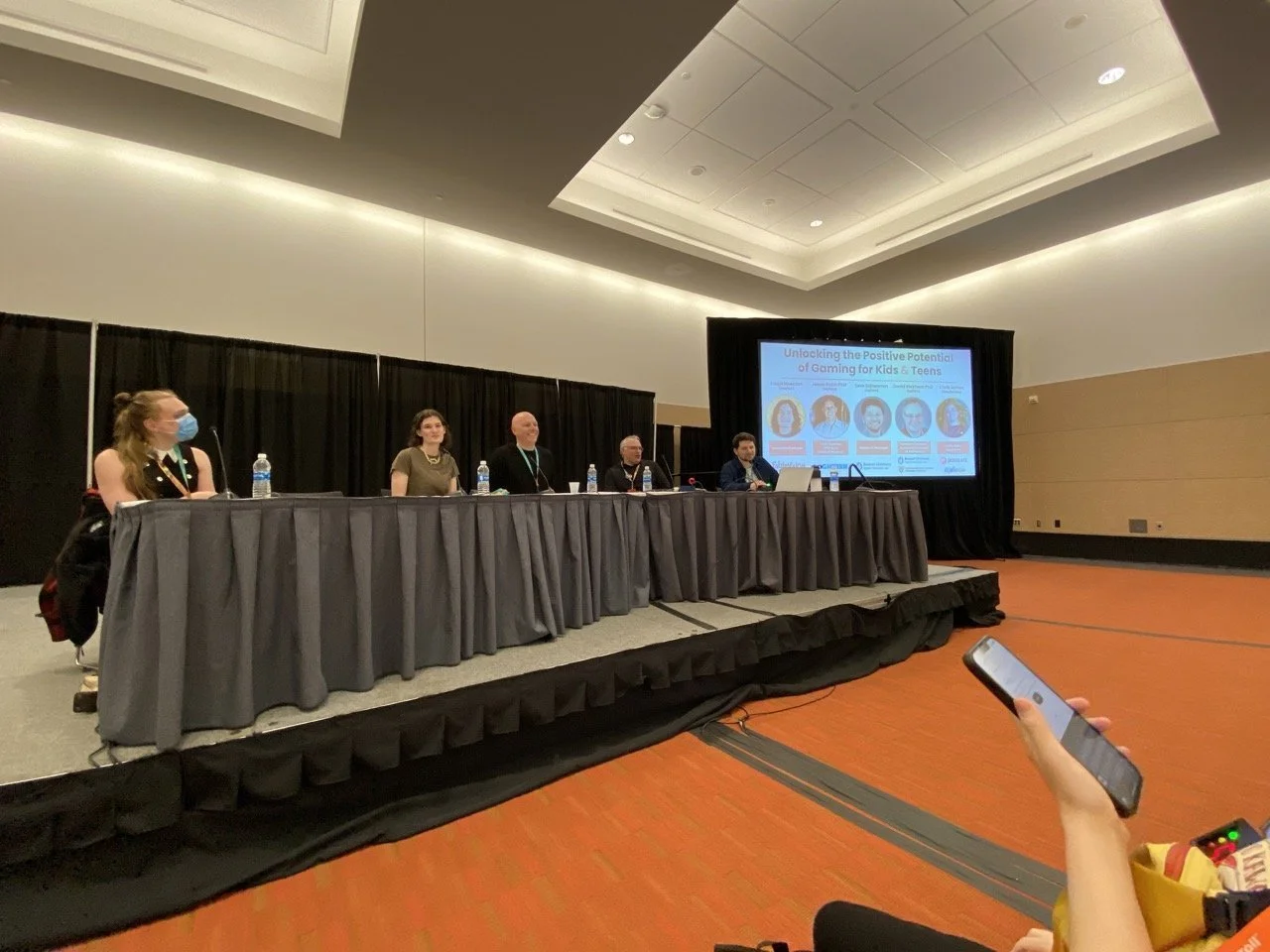
Naomi represented FableVision Studios on a panel about Gaming and Parenting called “How Young is Too Young”.  Here’s her recap:

NAOMI:
I was really excited to represent FableVision Studios as a Creative Strategist and also as a parent of a young (19 months) media consumer.  The panel was a power-packed group of power-thinkers and kids’ media creators, including:

Dave Schlafman: Creative Director, CloudKid
Eric Hardman: Independent Game Designer
Traci Lawson: Game Designer, Arkadium
Scott Traylor: Chief KID, 360Kid
Dave McMahon: Art Director, 360Kid
Scot Osterweil: Creative Director, MIT Education Arcade
Jason Wiser: Creative Director, Yaya Play

We tackled a wide range of subject matter, such as the effects of video game violence on kids, creative expression tools, and distinguishing between a game and a toy.

Scott Traylor, of 360Kid, made a great point (originally from a talk by Daren Carstens at Dust or Magic 2011) about the need for more creative expression tools for kids in the app marketplace.  As he said, there is no national crisis of kids not knowing their colors, shapes, letter and numbers.  Unfortunately, most of the top “educational” apps in the app store for kids right now are apps that “teach” just that. Everyone on the panel agreed that as game developers, we should be more inventive about the kind of apps we create for kids.  I mentioned DrawSomething as a great creative tool that spans all ages.  I’m also proud of FableVision’s upcoming summer release of Animation-ish on the iPad, a really incredible self-expression tool!

Scot Osterweil, of the MIT Education Arcade, and a longtime FableVision Studios collaborator, made the point that a more pressing crisis is kids not getting enough open-ended fully embodied play; i.e. running around outside.  With so many games, apps, shows and screens everywhere, parents and caregivers have an even greater responsibility than ever before to make sure there is a balance in kids’ life between the games on screens and the games in the real world.  That’s one of the reasons we’re so excited about FableVision Studios and the Nationial Wildlife Federation‘s collaboration on the Raiders of the Lost Aardvark App.  It’s a great, immersive interactive experience, and it also encourages the user to go out and experience the real nature around them and to develop a greater appreciation for the animals all around them–outside the screen.

One of the main points that I brought to the panel was the question of what actually defines a game.  My 19-month-old makes no distinction between a simple interactive experience on the iPad like making and popping bubbles or an interactive e-book like Monster at the End of the Book.  But older kids have a more clearly defined idea about what game means–something with rules, levels, rewards, etc. It’s very hard to make sweeping generalizations about whether games are good or bad for kids without knowing exactly what we define as a game.  Scot O. suggested that some interactive experiences on the iPad are more like a toy in that the User brings his/her own experiences and thoughts to the activity, whereas a game provides the context and rules for the user to follow. I also challenged the idea that a game had to be good or bad for kids.  As with all new technology, we’re quick to be afraid without assessing the pros and cons.  And as with every decision as a parent, finding balance with media and outdoor play and other enriching experiences is a constant challenge.

The other main point I made that I was hoping the audience would take away was about the importance of the parent and caregiver talking to their kids and with their kids about the media they are consuming–everything from apps to television to games to movies to books.  It’s the best way to know what they’re using, playing, whether they like it, what they’re learning from it and whether any of it is affecting them in a way that you, as a parent, educator or caregiver, may want to intervene.  Even the most well meaning media and games may make a kid scared or worried or uncomfortable. (I have a friend who recently told me her kid was afraid of Clifford the Big Red Dog because he was so big!) Parents are often the best judges of what is “good” and “bad” for their kids, and figuring out the appropriate balance of games and the content of the games is something that the parent and child should figure out together.

Thanks to Jason Wiser from YaYa Play for bringing together this great group!  Looking forward to many more chances to slice and dice the goings-on in the world of games and kids.

Posted in Conferences | Tagged , , , , , | Leave a comment

Weekly Click: April 10, 2012

Featured Article

Publishers Hustle to Make E-Books More Immersive

Book publishers have been forced to evolve in response to the sweeping storm of demand for e-readers and e-books. But there are a lot of decisions that come along with this adaptation: should a book become a dedicated app, allowing flexibility in terms of video and audio, though only on the iPad? Or should it become an “enhanced e-book,” compatible with the Kindle and the Nook as well, but with varying software differences for each one?

E-books are becoming more and more interactive and social experiences to compete with a young adult audience used to Twitter and YouTube.  Many e-books and e-book apps are incorporating video, audio, twitter feeds and check-in ability.  Will this make readers no longer rely on their imagination to hear character voices, picture their surroundings, or imagine what characters are wearing? As this technology continues to develop and grow towards things we can’t even imagine, reading, television, radio, and all media platforms may be seamlessly integrated into the e-book experience. E-readers are just beginning to give us glimpses into the potential interactive experiences on devices.

Turn your iPhone into a toy car

Makego has made an app that can turn an iPhone or iPod Touch into a toy vehicle, allowing parent and child to collaborate, learn, and play. Once your car is selected on the screen, you interact with the drivers through animations and sound in three different vehicles- racecar, ice-cream truck, and river boat!

Lego – Imagine

Check out these really clever and fun Lego representations of familiar characters. It’s amazing how far our imaginations and physical representations can truly take us!

PAX East 2012: Big and Occasionally Clever

Naomi Greenfield, Keith Zulawnik, and Ryan McNulty, three of our FableVisionaries attended the PAX East Boston gaming conference this past weekend, which was held at the Boston Convention & Exhibition Center just a few doors down from our studio! Not only did they get to see some incredible new games, apps, and innovative digital development, but Naomi Greenfield also spoke on a panel, addressing the controversy of introducing digital games to young children. Stay tuned for another blog post from Naomi, Keith, and Ryan on their experiences!

Jocelyn Goldfein, Facebook Engineer Explains Why It Matters There Aren’t More Girl Geeks

According to Jocelyn Goldfein, not only are there not enough good software engineers in the U.S. but women are highly underrepresented in this field, representing only 20% of all computer science majors. To attempt to remedy this problem, Facebook has begun to target freshmen, promoting computer science courses at their universities. Above all, Jocelyn Goldfein firmly believes that social media have made women users of technology like never before, but there is a need for them to become leaders, not just consumers.

Posted in Weekly Click | Tagged , , , , , , , | Leave a comment

A Weekend of Egg-celent Holiday Traditions


Here at FableVision we pride ourselves on being a great mix of talents and personalities working together to reach all learners through media, storytelling and technology. Our staff has a great mix of cultures and traditions; we are lucky to have team members with ancestry from countries like Ukraine, Bulgaria, Greece, Canada, Italy, Poland, and Japan. As Easter and Passover approach, we asked some FableVisionaries to share some of their holiday traditions.  It was amazing to see just how varied our backgrounds are.

Passover and Easter celebrations, in a nutshell, are stories that matter and stories that move. These stories have room for interpretation and are rich with traditions and rituals. The differences in which our cultures celebrate and acknowledge these holidays are some of the creative ways we connect the dots between cultures:

Didi: “Bulgarian Easter is a family holiday that honors old traditions, and unlike other holidays, has mostly resisted commercialization. When I was a kid, I remember my mother and grandmother spending a whole day baking the sweet Easter bread-kozunak, my sister and I helping out with the laborious kneading. Every family had their own variation on the bread, the recipe passed down from mother to daughter and sometimes a closely guarded secret.

While the bread was baking, we’d dye the eggs, with a combination of contemporary dyes and traditional methods like onion skin, wax and spring blossoms. The colors of Bulgarian Easter are deep, rich, natural colors like red, orange, yellow and green. Unlike the faint pastel colors, they are saturated and symbolize strength and vitality. We kids would have a few eggs reserved for our own creative ideas – crayons, paints, glitter… I even used nail polish once!

On Easter morning, we would eat the bread for breakfast with Nutella spread on it, and have the Easter Egg Fight – everybody grabs a colorful egg and cracks somebody else’s egg with it, the survivor then hits somebody else’s surviving egg and so on until only one intact egg is left. The victor egg is kept around until next Easter, at which point it is ceremonially broken, and if it hasn’t rotten, then the year will be good! (eggs have a sneaky way of neatly drying out into a little ball… so the year is always good!)

After the egg fight, we’d take a plate of Easter bread and dyed eggs to every neighbor, who would in turn give us some of theirs, so we can all try each other’s bread recipes and egg dying techniques. Easter was among my favorite times of the year, when we’d all come together to create beautiful and delicious things that we would then share with our neighbors. I truly miss that spirit of the holiday, but try to keep up my side of it every year by baking my mother’s bread recipe and dying brightly colored eggs the way grandma taught me, and then sharing them with my friends”.

Margarita: “In Greece we prepare the traditional Easter bread- tsoureki and we dye the eggs red (red is the color of life as well as a representation of the blood of Christ). However, it’s some of our other traditions and rituals that set us apart and make the holiday truly fun and unique.

For us, Holy Friday is a day of mourning, not of work (including cooking). Flags are hung at half-mast and church bells ring all day in a slow mournful tone.

Then on Saturday, the celebratory mood starts with the arrival of the Eternal Flame by a military jet. It is distributed to waiting Priests who carry it to their local churches. This event is always televised and everyone awaits it!

Another unique tradition in Greece takes place at the end of the Saturday midnight services. As soon as “Christos Anesti” (Christ has Risen) is called out, church bells begin to ring non-stop, ships in ports all over Greece sound their horns, floodlights are lit on large buildings, and great and small displays of fireworks and noisemakers are set off. This really kicks off the celebrations for Easter Sunday.

On Easter Sunday, the customary main attraction of the holiday is the whole roasted lamb or goat, to represent the Lamb of God. The spits are set to work, and grills are fired up. Ovens are filled with traditional accompaniments and all the trimmings. Great Greek wines, ouzo, and other drinks flow freely, and preparations for the meal turn into festive celebrations even before the eating begins”.

Fiana: “In Ukraine, Easter was always one of my favorite favorite holidays. Some of the traditional rituals include the whole town going to the Church on Sunday night with a prepared basket of Easter Breads and eggs for the priest to bless. One of my favorite memories about this particular ritual was the ‘Krestiniy Khod’ ‘Christ’s Walk’- it is a walk around the church with burning red candles and prayer. Then the priest shouts ‘Christ is risen’ – and all the people answer – ‘Indeed risen!’

Like many European regions we have a traditional Easter cake-Paskha. It is usually baked like a pyramid, which symbolizes the Tomb of Christ and is decorated in colorful icing, raisins or sprinkles and optional religious symbols. We also paint eggs into different colors and designs. Then on Sunday we exchange the eggs and the Easter cakes with our family and neighbors. My town used to take the egg painting tradition further and decorate empty egg shells and hang them from the trees for the whole town to see. This was a beautiful sight because the town had an opportunity to bond.

Another tradition that is popular in my town during the Easter celebration is tying the day of remembrance of our friends and neighbors into the celebration. Traditionally on Saturday everyone made their way to the cemetery and the whole family ‘shares’ the Easter meal. The priest from the Church makes his rounds to bless and visit with the families at the gravestones. Candy and the Paskha are left on the gravestones and kids go around collecting them as a sign of their acknowledgement and respect for the dead.

Although there was a thick religious influence to this day, to me the holiday was aways a strong emphasis on community, respect and welcome spring”.

Renee: My parents used to leave a trail of milk chocolate eggs from my bedroom to the back door, leading me to believe that the Easter Bunny was in my room while I was sleeping…it was TERRIFYING!

Naomi: “One of my favorite Passover traditions is called Bdekat Chametz, which translates to ‘Searching for Unleavend Bread’ (Jews are commanded to not eat chametzfor the duration of the Passover holiday).  Bdekat Chametz is a ritual that involves a feather, a flashlight and oftentimes cheerios (little bits of chametz) hidden around the house.  The child (or grown-up child) in the house goes around the house with the flashlight and the feather and collects all the “remaining” pieces of chametz in the house.  These pieces are then ritually burned the next morning, making the house (at least) ritually free of chametz.

I always remember the search being very fun as a kid and now that I have a kid, it was very fun to do this with her (here’s a fun video of Sylvia searching for chametz) But for me, the searching for chametz has always had greater meaning.  Sure, we’re looking for little breadcrumbs, but I like to think of chametz as things that are stuck in our lives that we need to be freed of.  Things like getting upset about unimportant things, excessive worry, self-doubt.  I like to think of cleaning out chametz as looking inward at the things we want to clean out of the crevices in our mind, leaving us all more free by the next morning”.

Posted in FV Staff Stories, Personal Story, Reflections | Leave a comment